What Muscles Do Burpees Really Work? Yup, It's A Lot
Burpees aren't easy - but it makes sense when you realise how many different muscles they work at once.

March 30, 2022 - Updated April 8, 2026
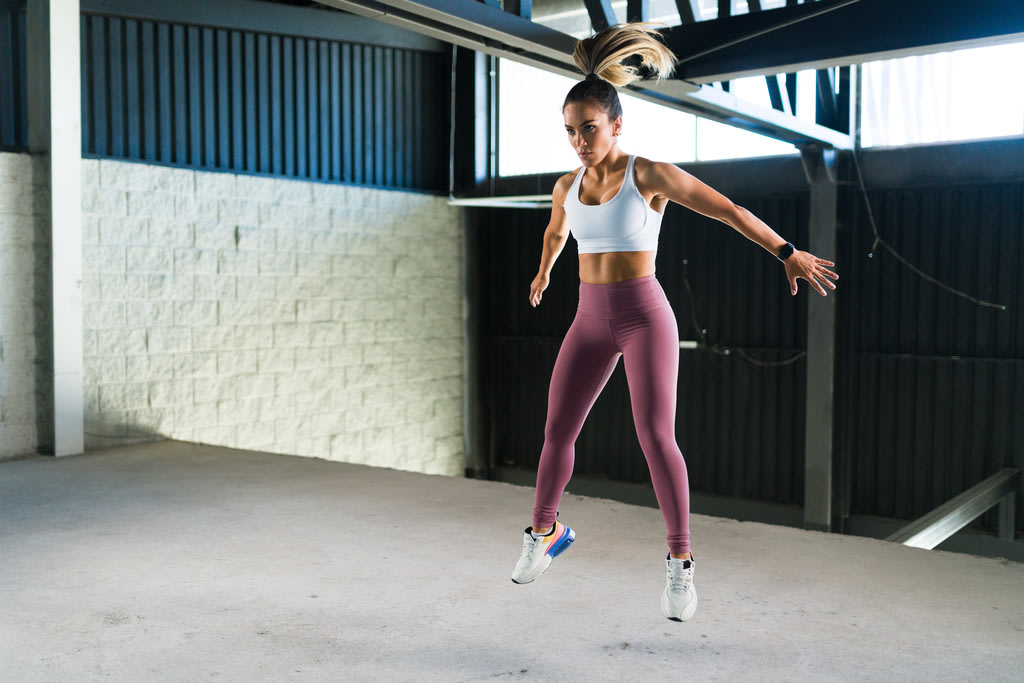
Whether you love them or dread them, burpees are one of the most efficient exercises you can do. A single burpee works your glutes, quads, hamstrings, core, chest, shoulders and arms all at once, making it one of the few truly full-body bodyweight movements.
Whether burpees are your best friend or your worst enemy, there’s no denying they are very effective when it comes to working many of the major muscle groups in your body, as well as your cardiovascular system - you'll definitely feel the burn in both your muscles and lungs!
No matter what your fitness level is, there are several benefits of burpees. They are a great way to build full-body strength, explosive power, endurance and cardio fitness, and you can easily dial the intensity up or down depending on how you’re feeling. Even better, because burpees are a bodyweight exercise, all you need is an exercise mat.
What muscles do burpees work?
Burpees recruit muscles across your entire body because they combine four movements (a squat, a plank, a push-up, and a jump) in a single rep. The primary muscles worked include:
Glutes and hamstrings during the squat and jump phases
Quads as you lower, jump back and jump up
Core (abs and lower back) throughout, to stabilise your spine in the plank
Chest, shoulders and triceps during the plank and push-up phase
Calves during the explosive jump
Hip flexors as you jump your feet forward and back
Burpees might be a bodyweight exercise, but don’t be fooled - the resistance of your body is more than enough to feel the burn in both your upper and lower body.
As you lower your body into the first squat position to place your hands on the floor, you’ll be engaging your quads (front of your thighs), hamstrings (back of your thighs) and glutes (your backside). Your lower back muscles will also be engaged to keep your spine straight and your body stable.
As you jump your feet backwards into the high plank position, you’ll continue to use your hip flexors, glutes and legs, while also engaging your core to keep you stable in the plank, your shoulders and upper back to hold your weight on your hands, as well as your chest and arms.
If you choose to make your burpee even more challenging by adding a push-up or doing a chest-to-floor burpee, you’ll be working your upper body even more, including your core, chest, shoulders, lats, traps and biceps.
Jumping your feet back in towards your hands will engage similar muscles to the first jump, and finally, as you explosively jump into the air, your calves, quads, glutes, hamstrings and core will all contract, and swinging your arms up adds extra work for your shoulders.
Few exercises recruit this many muscles simultaneously, which is exactly what makes the burpee such a time-efficient movement.
How to do burpees
Here's how to perform a standard burpee with good form:
Stand with your feet on the floor or mat, shoulder-width apart.
Bend at both the hips and knees to place your hands on the floor on either side of your feet. Make sure your spine remains in a neutral position.
Jump both of your feet backwards so your legs are completely extended behind you in a high plank position. Your body should be in one straight line from your head to your heels and your hands should be underneath your shoulders.
Jump both of your feet forwards in between your hands again, making sure your feet remain shoulder-width apart.
Lift your hands off the floor, raise your arms above your head and jump into the air.
Land softly with a slight bend in your knees to prevent injury, with your feet shoulder-width apart. Now you’re back to the starting position.
Repeat for the specified number of repetitions or seconds.
A tip from our exercise science team: Every rep, focus on landing softly with a slight bend in your knees. Your joints will thank you and it'll be so much easier to drop into your next rep.
Burpee modifications and progressions
Not every burpee needs to look the same. The best version is the one that you can do with great form and that challenges you at your current fitness level.
If you’re new to burpees, wanting to slow the pace or reduce the impact on your joints, you can remove all the jumps. When you get into the first squat position with your hands on the floor, instead of jumping your feet back, simply step your feet back one at a time into the plank position. You can do the same stepping motion to bring your feet back to your hands. Instead of the final squat jump, you can stand up straight like you are coming up from a squat. Remember, there’s no shame in modifying your exercises. It’s all about making your workout work for you.
When you’ve nailed your form and are feeling confident with a standard burpee, you might be ready to dial up the difficulty or try something new. Here are some challenging burpee variations:
Add a push-up when you are in the plank position
From the plank position, try lowering your chest and torso all the way to the floor and then pushing back up into your plank (this is called a chest-to-floor burpee)
Swap your jump at the end for a tuck jump (jump high and tuck your knees towards your chest), box jump (jump onto a box), lateral jump or jump over a dumbbell.
To add more resistance, you can also do burpees with dumbbells. The movement is exactly the same; you simply are in a plank position, holding your dumbbells rather than being on your hands. When you stand up, push your dumbbells straight up above your shoulders rather than jumping. Quick tip: Burpees with dumbbells are easier to do if your dumbbells have flat sides, rather than curved which may wobble or roll!
Want more burpees in your workouts or to get better at them? Burpees feature in a heap of Sweat programs, such as OG Kayla. Get started today with a free 7-day trial.
A more empowered you starts with Sweat, and our editorial team is here to bring you the latest fitness tips, trainer recommendations, wellbeing news, nutritional advice, nourishing recipes and free workouts.
* Disclaimer: This blog post is not intended to replace the advice of a medical professional. The above information should not be used to diagnose, treat, or prevent any disease or medical condition. Please consult your doctor before making any changes to your diet, sleep methods, daily activity, or fitness routine. Sweat assumes no responsibility for any personal injury or damage sustained by any recommendations, opinions, or advice given in this article.
Fitness