The Truth About DOMS (and Why 'No Pain, No Gain' Is Wrong)
Everything you need to know about delayed onset muscle soreness, including what causes it and how to get rid of it faster.

May 7, 2020 - Updated July 17, 2026
That deep ache in your legs two days after leg day isn't your body punishing you. It's not an injury. It's a sign you actually challenged your muscles enough for them to adapt and get stronger.
If you've ever struggled to walk down the stairs after your first proper squat session, you've experienced delayed onset muscle soreness, or DOMS. The good news is that DOMS is completely normal, it doesn't last forever, and there's plenty you can do to feel better faster so you can continue training without wincing.
What is DOMS, and why does it happen?
DOMS is the tightness, tenderness and stiffness that shows up 24 to 72 hours after a workout, usually peaking around the two-day mark. It happens when you try a new training style, lift heavier weights, increase your intensity, or add exercises your muscles aren't used to.
During that kind of work, especially eccentric movements where you're slowly lowering a weight, your muscle fibres develop tiny amounts of damage called micro-tears. Research suggests this micro-damage is a key driver of those post-workout aches, but it's also an essential part of how muscles adapt and grow stronger over time.
For most people, DOMS means muscles that are tender to touch, stiff, or a little weaker than usual for a day or two. It can happen at any stage of your fitness journey, whether you're brand new to training or you've been at it for years and just switched things up.
Why no soreness doesn't mean you didn't work hard enough
It's really easy to treat DOMS like a scorecard and think that if you can't feel it the next day, surely you didn't train hard enough. But that's not how muscles actually work.
Soreness is usually a response to unfamiliar stress on your muscles, not a measure of your effort. Once your body adapts to a training style, exercise or intensity, you'll notice that DOMS naturally becomes less severe, even if you're lifting more, moving faster or working just as hard.
Feeling sore is common early on (like if you've just started working out or started a new program) and tends to ease off as your muscles adapt. That's the training doing exactly what it's meant to do.
The same works in reverse. Feeling wrecked the next day doesn't mean you did more good work. It's not something to be proud of. Soreness that's severe or lingers for days can mess with your routine and actually point to doing too much too soon, rather than being a badge of honour.
Our Sweat trainers always say that the more reliable signs you're progressing are things like lifting more, finishing workouts feeling stronger, feeling less fatigued, or recovering faster between sessions. Those tell you a lot more about your results than how sore you feel the next day.
Should you keep training with sore muscles?
This is one of the most common questions we hear from the Sweat community, and the answer is usually yes, but you might want to make some slight adjustments.
You definitely don't need to wait until the soreness is completely gone before your next session. For most people, DOMS isn't a reason to stop moving, but it can be a reason to change what you do for a few days. If you're properly sore and struggling to move, it might be time to take a full rest day or just go for a walk. If a specific muscle group is aching, you can train a different area or switch things up with a different training style like yoga or Pilates.
Remember, your muscles repair and rebuild when you rest, not when you work out. Rest, sleep and good nutrition matter just as much as your workouts themselves.

What actually helps sore muscles recover faster
Unfortunately, there's no single fix or secret hack to get rid of muscle soreness, but a few things can definitely help ease the pain faster.
Keep moving. Light movement like walking or a gentle swim increases blood flow to sore muscles, which can help clear waste products and ease stiffness much faster than resting completely still.
Stay on top of your hydration. Drinking water before, during and after your session can help reduce muscle soreness and support recovery.
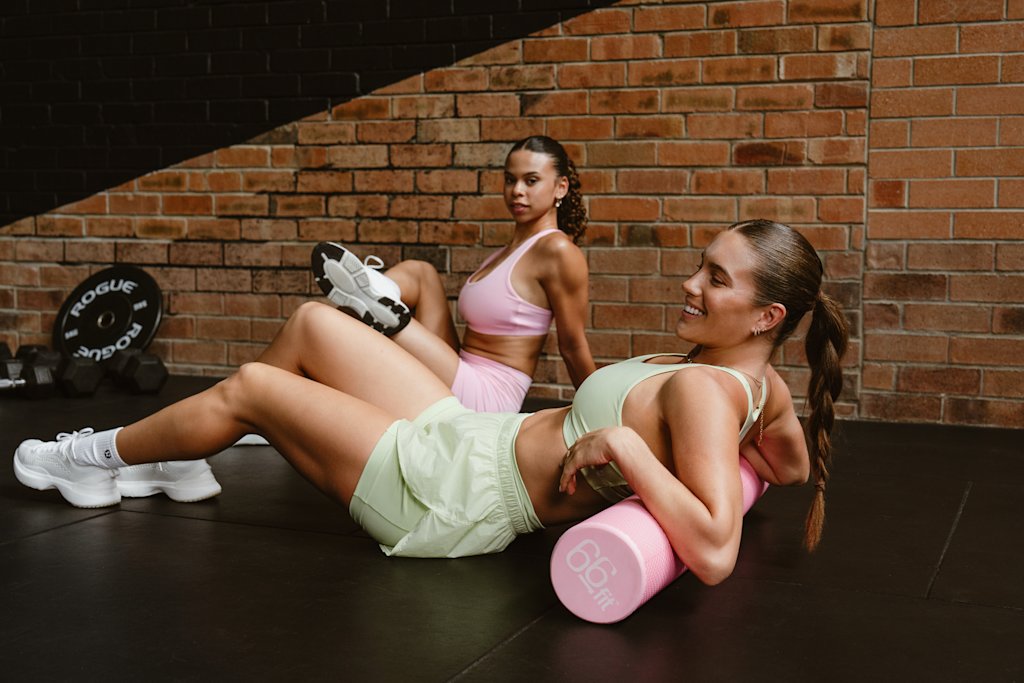
Try foam rolling. A few minutes of stretching or self-massage on tender areas can take the edge off and improve how muscles feel.
Consider a proper massage. If you can afford it, research shows that a massage can work wonders in easing DOMS and the fatigue that comes with it. Otherwise, learn to love that foam roller.
Cool things down. A short stint in cool water (around 11 to 15°C, so bracing rather than freezing) for 10 to 15 minutes after a tough session may take some soreness down a notch. Compression garments can offer a similar effect for a few days afterwards.
You don't need to do all of these all at once. Pick one or two that fit your routine, see if it makes a difference, and build from there.
How to avoid the worst of it next time
Instead of focusing on how to get rid of DOMS when it's already hit, the best way to manage DOMS long term is to build intensity gradually, a principle known as progressive overload. Rather than jumping straight into your heaviest lifts possible or thrashing your body at an unsustainable intensity, focus on increasing your weights, reps or overall training frequency a little at a time.
A proper cool-down helps too. A few minutes of low-intensity movement and static stretching at the end of a strength session, like the guided cool-downs built into every Sweat workout, can take some sting out of the days that follow when you've really challenged yourself.
Bounce back quicker
DOMS is a normal part of getting stronger, not a sign you've done something wrong (or a sign you haven't tried hard enough if you don't get it). Stay on top of your hydration, sleep, and gentle movement, and you'll find you bounce back more quickly every time.
If you want workouts that build in recovery from the start, the Sweat app balances strength, cardio, and rest days so soreness doesn't derail your progress.
A more empowered you starts with Sweat, and our editorial team is here to bring you the latest fitness tips, trainer recommendations, wellbeing news, nutritional advice, nourishing recipes and free workouts.
* Disclaimer: This blog post is not intended to replace the advice of a medical professional. The above information should not be used to diagnose, treat, or prevent any disease or medical condition. Please consult your doctor before making any changes to your diet, sleep methods, daily activity, or fitness routine. Sweat assumes no responsibility for any personal injury or damage sustained by any recommendations, opinions, or advice given in this article.
Fitness