Forward Vs Reverse Lunges: What’s The Difference?
One step forward or one step back? Here's what sets forward and reverse lunges apart.

November 16, 2022 - Updated April 28, 2026
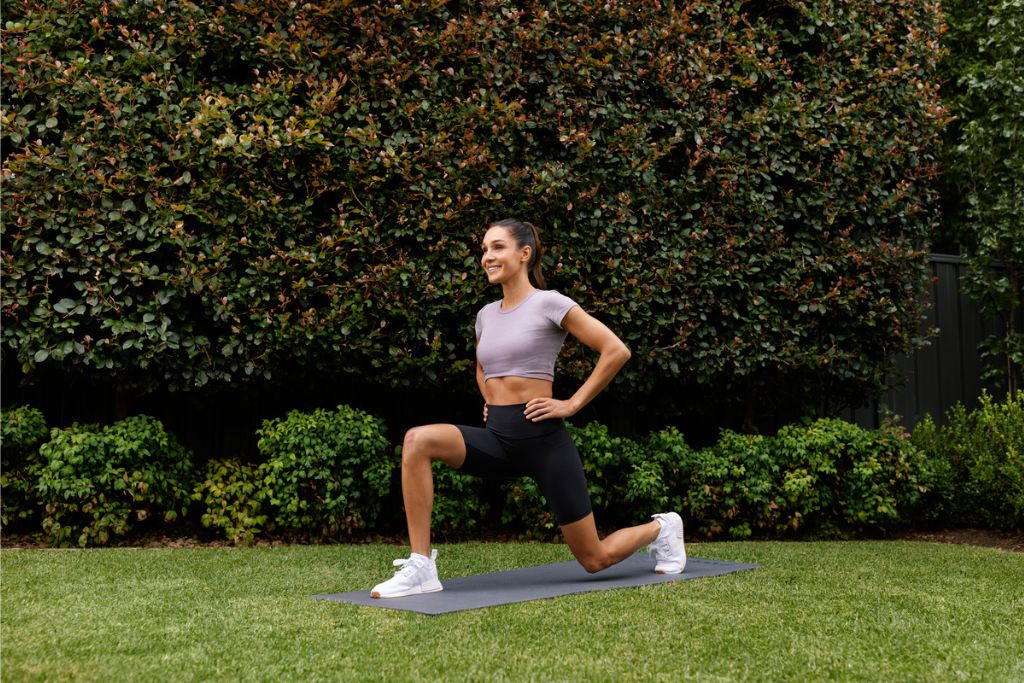
Lunges are one of those exercises that earn their spot in almost every lower-body workout, and for good reason. They work your glutes, quads, hamstrings and calves all in one movement, they can be done with or without equipment, are a great exercise for every fitness level, and they translate directly to real-life movement. Walking up stairs, stepping off a kerb, chasing a bus — that's all lunge territory — and you'll find lunges in plenty of Sweat programs.
But once you move past the basics, there's a question we hear a lot: What's the difference between a forward lunge and a reverse lunge? They look similar, but they feel different, challenge your body in different ways, and suit different people. Here's what you need to know.
What forward and reverse lunges have in common
Both variations are compound movements, meaning they work multiple muscle groups at the same time. Your glutes, quads, hamstrings, calves and core all get a workout regardless of which direction you step.
Both also involve hip extension, which is genuinely useful if you spend a lot of your day sitting. If your hips feel tight or your glutes feel like they've clocked out, lunges are one of the better exercises to wake everything back up and improve your hip mobility.
30 Secs
Reverse lunges: more control, less knee stress
In a reverse lunge, you step one foot back while your front foot stays flat on the floor. That stable front foot is the key difference. It keeps your centre of mass steady throughout the movement, giving you much more control and greater stability.
This makes reverse lunges the better starting point if you're newer to lunges, working around a knee issue, or planning to add weight. Because your front knee isn't being driven forward by momentum, it's easier to keep it stacked over your ankle rather than creeping past your toes. Less knee drift means less strain on the kneecap and surrounding tissue.
Muscle-wise, reverse lunges tend to place slightly more emphasis on your hamstrings and glutes compared to forward lunges. If building your posterior chain is the goal, they're a solid choice.
Forward lunges: more challenge, more quad work
Forward lunges are the more demanding variation. When you step forward, your back heel lifts off the ground and your centre of mass shifts, which immediately creates more instability. Your core has to work harder to keep you upright, and your quads take on more of the load as you push back to the start position.
That push-off is also where forward lunges become trickier on your knees. If your front knee tracks too far forward or your foot doesn't land far enough ahead, you're putting extra pressure on your kneecap. This is why form really matters here, especially before adding any weight.
Forward lunges are great for targeting your quads, challenging your balance, and progressing your training once you've nailed the basics. They're just not where most people should start.
So, which lunge should you be doing?
The honest answer? A bit of column A and a bit of column B is best, but it really depends on where you're at.
If you're new to lunges, have any knee issues, or want to load up with dumbbells or a barbell, go for reverse lunges. They're more forgiving and stable, yet still incredibly effective.
If you're comfortable with the movement pattern and want to increase the challenge, add forward lunges in. Just take your time to get your form right, step far enough forward that your knee sits above your ankle, and push off with control. You don't need to rush through your reps.
And if either variation causes knee pain, don't push through it. Try static lunges instead and check in with a health professional if it persists.
Any lunge variation done well will do great things for your lower-body strength. It's not about which one is "better" across the board. It's about which one is better for your body, goals and where you're at.
Erin is a writer and editor at Sweat with years of experience in women's publishing, the fitness industry, media and tech. She's passionate about the power of movement, and you can often find her on a yoga mat, a hike, a dance floor, in the ocean or the gym.
* Disclaimer: This blog post is not intended to replace the advice of a medical professional. The above information should not be used to diagnose, treat, or prevent any disease or medical condition. Please consult your doctor before making any changes to your diet, sleep methods, daily activity, or fitness routine. Sweat assumes no responsibility for any personal injury or damage sustained by any recommendations, opinions, or advice given in this article.
Fitness