How To Do A Pull-Up (Especially If You Can't Do One Yet)
How to do a pull-up with good form, plus the progressions that get you to your first rep.

August 12, 2020 - Updated November 5, 2026
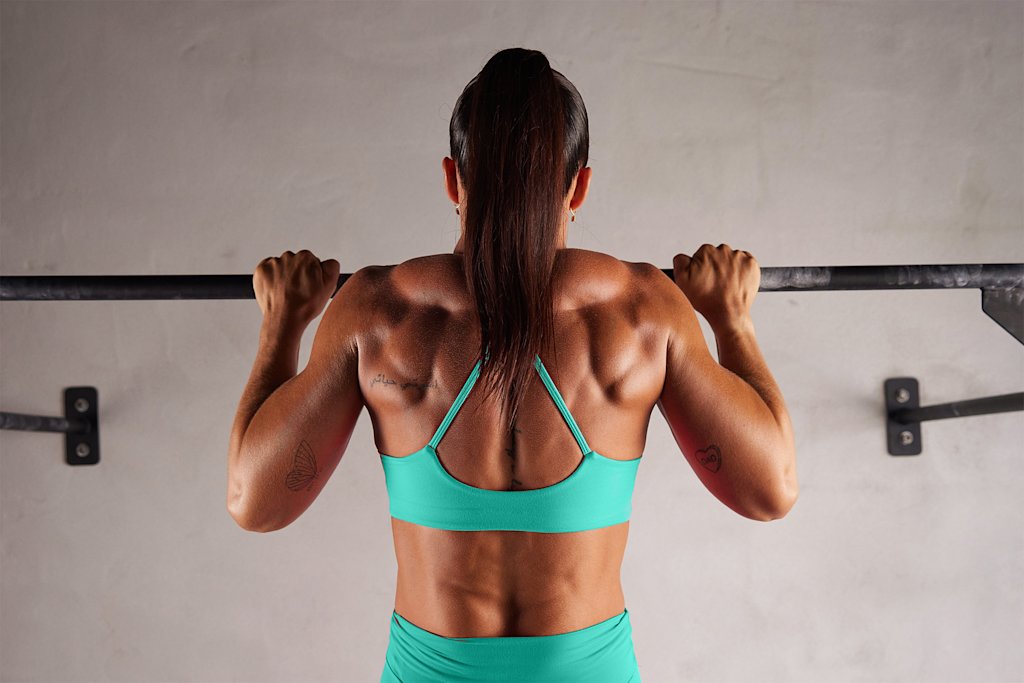
Hanging from a bar, pulling with everything you've got and going precisely nowhere is one of the most common and frustrating gym moments there is. To do a pull-up, grab the bar with an overhand grip just wider than your shoulders, pull your shoulders down and away from your ears, then drive your elbows towards your hips until your chin clears the bar. Lower yourself slowly until your arms are straight again. That's one rep.
It sounds and looks so simple, but if you can't do one yet, you're in very good company. Most women can't do a pull-up without training for it specifically, and your ability to do a pull-up (or lack thereof) says nothing about how fit you are. It's a skill and a type of strength that most workouts don't train directly. If you need convincing it's worth the effort, here are 10 reasons to love pull-ups.
Your first pull-up will probably take longer than social media suggests. In one University of Dayton study, 17 women trained three times a week for three months, and only four could do a pull-up at the end. Their upper-body strength still went up by around 36%, so the training was working; it just needed more time. We'd rather you know that now so you don't give up at week six.
The good news is that pulling strength is very trainable, and you can start building it today with nothing more than a bar to hang from.
How to do a pull-up with good form, step by step
A good pull-up starts before you pull: set your shoulders, brace your core, then lead with your elbows.
Set up your grip. Grab the bar with an overhand grip (palms facing away from you) and your hands slightly wider than shoulder-width. Wrap your thumbs around the bar for a more secure hold. If you can't reach it and don't want to jump up, stand on a box or step.
Start from an active hang. Your arms are straight, but you're not hanging limply. Pull your shoulders down and back, as if you're sliding your shoulder blades into your back pockets. Brace your core like you're about to cough, squeeze your glutes and keep your legs together, slightly in front of you. This shape stops you swinging.
Pull your elbows down towards your hips. Think about driving your elbows down and back rather than pulling with your hands. This is what gets your lats (the big muscles down the sides of your back) doing the work.
Get your chin over the bar. Chin clearing the bar counts as a full rep. As you get stronger, aim to bring the bar towards your upper chest. Pause for a moment at the top.
Lower slowly. Take two to three seconds to lower yourself until your arms are fully straight. No dropping or stopping halfway down.
Repeat or step down. If one rep is all you've got today, step back onto your box or drop down to the floor with soft knees. If you've got more in you, reset your shoulders and go again from step two.
Form tip: If your arms are burning but your back isn't feeling much, think more about your elbows. When researchers measured muscle activity during pull-ups, the lats worked harder than any other muscle tested, with the biceps next. Your back should be doing most of the work!
What muscles do pull-ups work?
Pull-ups mainly work your lats, with a lot of help from your arms, upper back and core. Here's what's working on every rep:
Lats (latissimus dorsi): the large muscles running down the sides of your back, and the main movers.
Biceps and forearms: they bend your elbows and hold onto the bar, which is why pull-ups build serious grip strength.
Middle and lower traps and rhomboids: the muscles between your shoulder blades, which keep your shoulders down and back.
Rear delts: the back of your shoulders. (Want more? Try these rear delt exercises.)
Core: your abs and obliques stop you swinging and keep your body in one line.
That's a lot of muscle in one movement, which is a big part of why pull-ups are so hard, and so worth learning.
Why pull-ups feel so hard (especially for women)
Pull-ups are hard because you're lifting your entire body weight using muscles that most workouts barely touch. You can run, lift heavy in your gym workouts and never miss a session, and still not have trained this exact pulling strength enough to be able to do a pull-up.
There's a biology piece too. Women tend to carry a smaller share of their muscle in the upper body than men, which research links to the bigger strength gap between the sexes in the upper body. Lower testosterone also means upper-body muscle tends to build more slowly.
None of that means women can't do pull-ups. It just means the way you train matters more. A structured progression and regular strength training will get you much further than throwing yourself at the bar once a week and hoping for the best.
Common pull-up mistakes and how to fix them
Swinging or kipping. Unless kipping pull-ups are your goal, swinging takes the work away from your muscles. Squeeze your glutes, keep your legs together and slow everything down. Instead of kipping, perform strict pull-ups with a resistance band.
Shrugging. If your shoulders creep up to your ears, your back muscles switch off and your shoulders take on more strain. Pull your shoulders down before you bend your elbows.
Half reps. Two full reps beat 10 where you stop short. Start every rep with straight arms and finish with your chin over the bar.
Craning your neck. Reaching your chin up to clear the bar doesn't count. Keep your neck long and bring your chest towards the bar instead.
Only practicing the full pull-up. Failing at the same rep week after week builds frustration more than strength. Train the progressions below, and test your full pull-up every few weeks.
Pull-up progressions to get your first rep
The fastest way to your first pull-up is to train the parts of it you can already do, then make them harder. We recommend working through these in order, but depending on your strength level, you do you. If you're brand new to strength training, spend a few weeks on the first three before moving on.
Dead hang
Grip the bar overhand, hands just wider than your shoulders, and hang with your arms fully straight. Keep your shoulders pulled down and away from your ears, brace your core lightly and breathe. Start with three holds of 20 to 30 seconds. (More on why we love these in our dead hang guide.)
Muscles worked: forearms, grip, lats, shoulders.
Form tip: If your shoulders feel pulled up towards your ears, step down and reset. An active hang is the goal.
When you're ready for more: Build up to three holds of 45 to 60 seconds, then try hanging from one hand for a few seconds at a time, switching sides.
Scapular pull-up
From a dead hang, pull your shoulder blades down and back without bending your elbows. Your body will rise an inch or two. Lower back to the hang with control. This is the very first part of every pull-up, and learning it early makes the rest much easier. Aim for three sets of 8 to 10 reps.
Muscles worked: lower and middle traps, lats.
Form tip: Your arms stay straight the whole time. If your elbows bend, you've turned it into a mini pull-up.
When you're ready for more: Pause for two seconds at the top of each rep, or add a weighted vest.
Inverted row
Set a barbell in a squat rack or Smith machine at about hip height. Lie underneath it, grab it with an overhand grip and keep your body in a straight line from heels to shoulders (like a plank, facing the ceiling). Pull your chest to the bar, then lower with control. Aim for three sets of 8 to 12 reps. At home, the edge of a sturdy table works. (You'll find more ideas in our bodyweight back exercises.)
Muscles worked: lats, rhomboids, rear delts, biceps.
Form tip: Don't let your hips sag. Squeeze your glutes to keep your body in one straight line.
When you're ready for more: Walk your feet further forward or lower the bar, so your body is closer to horizontal. Elevating your feet on a bench makes it harder again.
Flexed-arm hang
Stand on a box so your chin is above the bar, grab it overhand and step off. Hold that top position for as long as you can, squeezing your back, then lower slowly. Rest and repeat three times. This builds strength in the exact position where most people get stuck.
Muscles worked: lats, biceps, upper back, grip.
Form tip: Keep your chest up and your shoulders away from your ears, even as you tire.
When you're ready for more: Hold for longer, then add a pause halfway down on the way out.
Negative pull-up
Step or jump up so your chin is over the bar, then lower yourself as slowly as you can, aiming for three to five seconds until your arms are straight. Step back up and repeat. The lowering part of a movement is where you're strongest, so this lets you train the full range before you can pull it. Aim for three sets of 4 to 6 reps.
Muscles worked: lats, biceps, upper back, core.
Form tip: Control the whole way down. If you drop in the last third, that's your cue to stop the set.
When you're ready for more: Slow it down to six to eight seconds, then add a weighted vest or hold a light dumbbell between your feet.
Band-assisted pull-up
Loop a thick resistance band over the bar and put one foot or knee in it. The band takes some of your body weight so you can practise the full pull-up. Aim for three sets of 5 to 8 reps.
Muscles worked: lats, biceps, upper back, core.
Form tip: A band helps most at the bottom of the rep and least at the top, so the top will still feel hard. That's why we pair band work with negatives and flexed-arm hangs.
When you're ready for more: Move to a lighter band. In a gym, the assisted pull-up machine works the same way; reduce the assistance a little at a time.
Strength work that makes pull-ups easier
Some of the best pull-up training doesn't happen on a bar. Lat pulldowns on a cable machine and single-arm dumbbell rows build the same pulling muscles, and you can go heavier on them week to week in a way you can't with your body weight. Biceps curls help too.
What if you don't have a pull-up bar?
You don't need one to start. Inverted rows under a sturdy table, dumbbell rows and resistance band pulldowns (loop a band over a closed door's top edge using a door anchor) all build pulling strength at home.
When you're ready for bar work, a doorway pull-up bar is the cheapest option. Check your door frame is solid and the bar is rated for your weight before you hang from it. Playgrounds often have monkey bars and pull-up bars too, if you've got a park nearby!
How often should you train for a pull-up?
Two to three sessions a week, on non-consecutive days, is plenty for most people. Pick two or three of the progressions above and do them at the start of your upper-body workout, ideally earlier in your session while you're still fresh. Ten to 15 minutes is enough.
If your week is chaotic, plan for two and treat a third as a bonus. Your back muscles need rest days to get stronger, so more isn't better here.
If you'd like a plan to follow, Pull-Ups Unlocked in the Sweat app is a 12-workout series designed to build the strength and technique for your first pull-up, or your next few.
Where to start today
Not being able to do a pull-up is the perfect place to start your training. Today, find a bar and hang for 20 seconds, three times. Next session, add scapular pull-ups. A few weeks from now, you'll be lowering yourself from the top of the bar under control.
Getting your first pull-up takes months, not days. Every hang, row and slow negative counts towards it, and the day your chin clears the bar under your own power... that feeling is unmatched.
A more empowered you starts with Sweat, and our editorial team is here to bring you the latest fitness tips, trainer recommendations, wellbeing news, nutritional advice, nourishing recipes and free workouts.
* Disclaimer: This blog post is not intended to replace the advice of a medical professional. The above information should not be used to diagnose, treat, or prevent any disease or medical condition. Please consult your doctor before making any changes to your diet, sleep methods, daily activity, or fitness routine. Sweat assumes no responsibility for any personal injury or damage sustained by any recommendations, opinions, or advice given in this article.
Fitness