Is Pilates Strength Training? Here's What the Science Says
Pilates absolutely builds strength, but it shouldn't be the only strength training in your routine.

April 30, 2025 - Updated August 31, 2026
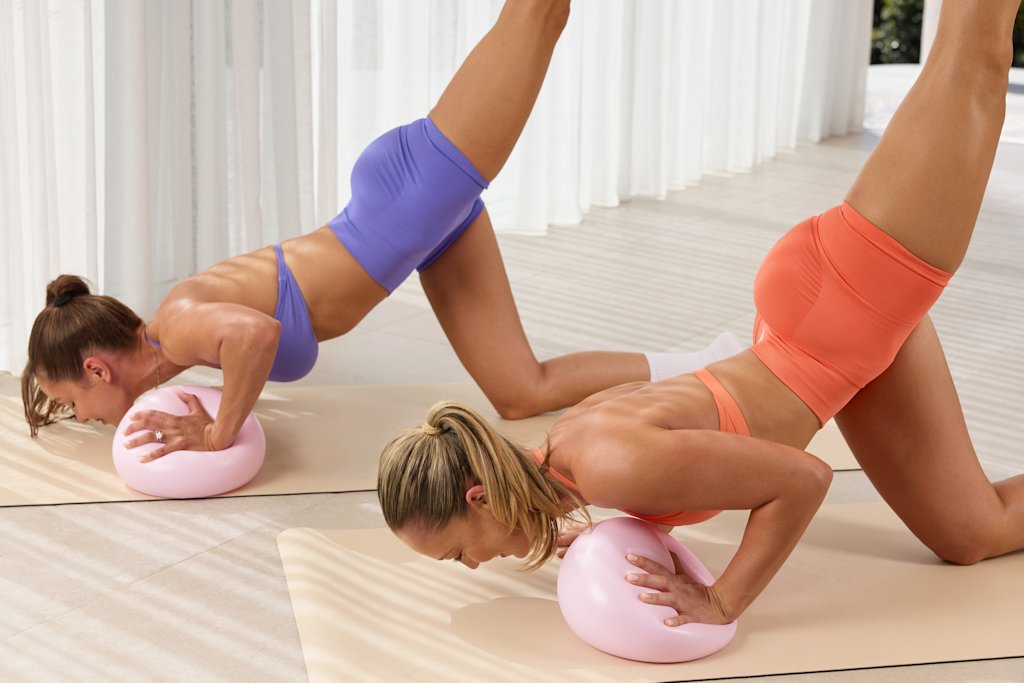
Pilates and strength training are two of the most popular training styles out there at the moment, and they're consistent faves in the Sweat app. One of our most-loved programs is The 3-2-1 Method with Katie Martin, which gives you three strength workouts, two Pilates sessions and one run (or other cardio) each week. Strength & Pilates is also our first multi-trainer program, giving you a mix of Kayla's at-home strength workouts and Jetaya's mat Pilates sessions every week.
We're stoked about how popular this way of training has become. Pilates has a cult following and has (rightly so) earned a reputation for building incredible core strength, improving posture, and helping you move with more control, while traditional resistance training with weights does more to build muscle mass and strength.
So, where does Pilates fit on the strength training scale? Does it count, or do you still need traditional strength training no matter how hard your Pilates workouts feel?
Is Pilates strength training?
At its core, strength training simply means working your muscles against resistance so they adapt and become stronger, so yes, Pilates is a form of strength training.
Resistance doesn't always have to come from a barbell, dumbbells or gym machines, and Pilates can easily tick that box whether you're working against the resistance of your own body, resistance bands, ankle weights, a Pilates ball, ring, or you have access to a reformer machine.
Research has also shown it can be an effective way for older women to increase full-body strength, and you can challenge yourself with more advanced moves as you progress. But here's where things get a little more nuanced and what we want women to know.
While Pilates can absolutely improve strength (and deliver a bunch of other benefits like balance, mobility and posture), a key issue with research on Pilates is that the results often compare those doing Pilates to those doing nothing, rather than comparing Pilates with traditional strength training.
Compared to someone doing absolutely nothing in the way of workouts, of course you'd expect them to make strength gains by adding Pilates to their routine. But to make significant improvements in muscle, bone density, and strength, Pilates alone is not what we'd have you doing. We still want you to strength train.
Where Pilates falls short
Pilates can absolutely make you stronger, especially if you're just starting your fitness journey. We're not arguing about that. But when exercise scientists talk about building muscle, increasing bone density or developing maximal strength, they're generally referring to progressive resistance training.
In Pilates, progression usually comes from improving technique, increasing control, adding repetitions, incorporating more advanced exercises, or adding extra resistance with ankle or wrist weights or extra springs on the reformer.
With traditional strength training, progression is much easier to measure. You might start by squatting 30 kilograms and gradually build to 50, 70 or even 100 kilograms over time (aka progressive overload). You'll never achieve that level of load and strength progression in Pilates.
That gradual increase in challenge is known as progressive overload, and it's a key driver of long-term strength and muscle growth, as well as one of the most effective ways to maintain and improve bone density.
While Pilates certainly offers opportunities to progress, it generally just doesn't provide the same capacity to continually increase external load as traditional resistance training.

Why we love adding in some Pilates each week
If Pilates really isn't your thing and you love the gym, power to you. No pressure to add in something you don't like. But you can gain a ton of benefits by adding Pilates to your schedule (even if it's just one session each week).
Adding Pilates to your routine can level up your core and functional strength, muscular endurance, balance, flexibility, mobility, coordination and posture.
Like traditional strength training, Pilates can also involve a mix of compound movements (exercises that engage multiple muscle groups, such as squats) and isolation exercises (which target a specific muscle, like bicep curls).
If you’re used to traditional lifting though, your first Pilates session might surprise you. The strength and movement patterns involved in Pilates are quite different to traditional strength training, and it’s common for gym-goers to get on the mat or reformer machine and discover a whole new level of hard due to the control, balance, endurance, reps, and core strength required.
Megan Godfrey, one of our accredited trainers and exercise physiologists, trains both and still gets caught out.
"I love strength training to challenge myself by lifting heavy to build muscle, and Pilates to help me move with more control and focus on the smaller details I can sometimes overlook. It might look gentle, but Pilates still humbles me every time. It's a totally different workout."
Kayla is also obviously so fit and strong, but every time she tries Pilates, she feels so out of her depth. So prepare to be humbled if you're a newbie. The challenge is exactly why it's so addictive.
So, how should you train?
As we said, if you're not into Pilates, you don't have to do both. But... if you don't love strength training, we still recommend adding it to your routine. And if you love both, they complement each other incredibly well.
Including a mix of the two is exactly how Megan trains.
"For me, Pilates doesn't replace strength training; it complements it. Lifting helps me build strength, while Pilates works on my core, stability, mobility and body awareness. Since adding Pilates to my routine, I can move through exercises with more control, access a greater range of motion and engage my core more effectively during heavy lifts. I've felt stronger, more confident and even started hitting more personal bests."
And that's why programs like Strength & Pilates or The 3-2-1 Method with Katie Martin have become so popular: they lay out your workouts for you, with a balanced mix of training styles and no guesswork. You can also follow a strength program in the Sweat app, then throw in the odd Pilates workout from the On Demand tab.
What to do on the days you don't have the energy to lift
Changes in sleep, stress, your menstrual cycle and nutrition can all leave you without the physical or mental energy for weightlifting, and pushing through a session like that can leave you even more depleted. Pilates can be the perfect workout to do instead.
"Some days I just don't have the energy to lift heavy. Maybe I didn't fuel properly or had an average sleep. Instead of skipping movement altogether, I know I can grab some lighter weights, get on the mat and do Pilates. It doesn't demand the same physical or mental energy, but I can still move my body and finish feeling so much better," says Megan.
Swapping a heavy session for Pilates on those days keeps your training consistent, which matters far more over months and years than a single workout does.
Consistency is everything
Ultimately, the best workout is one you'll enjoy enough to do consistently. But if you're in your Pilates era, adding some progressive resistance training alongside your Pilates routine is one of the most effective things you can do for your muscles, bones and long-term health.
Erin is a writer and editor at Sweat with years of experience in women's publishing, the fitness industry, media and tech. She's passionate about the power of movement, and you can often find her on a yoga mat, a hike, a dance floor, in the ocean or the gym.
* Disclaimer: This blog post is not intended to replace the advice of a medical professional. The above information should not be used to diagnose, treat, or prevent any disease or medical condition. Please consult your doctor before making any changes to your diet, sleep methods, daily activity, or fitness routine. Sweat assumes no responsibility for any personal injury or damage sustained by any recommendations, opinions, or advice given in this article.
Fitness