A Beginner’s Guide To Getting Started With Pilates
New to Pilates? Here's everything you need to know before you roll out your mat for the first time.
May 27, 2020 - Updated August 31, 2026
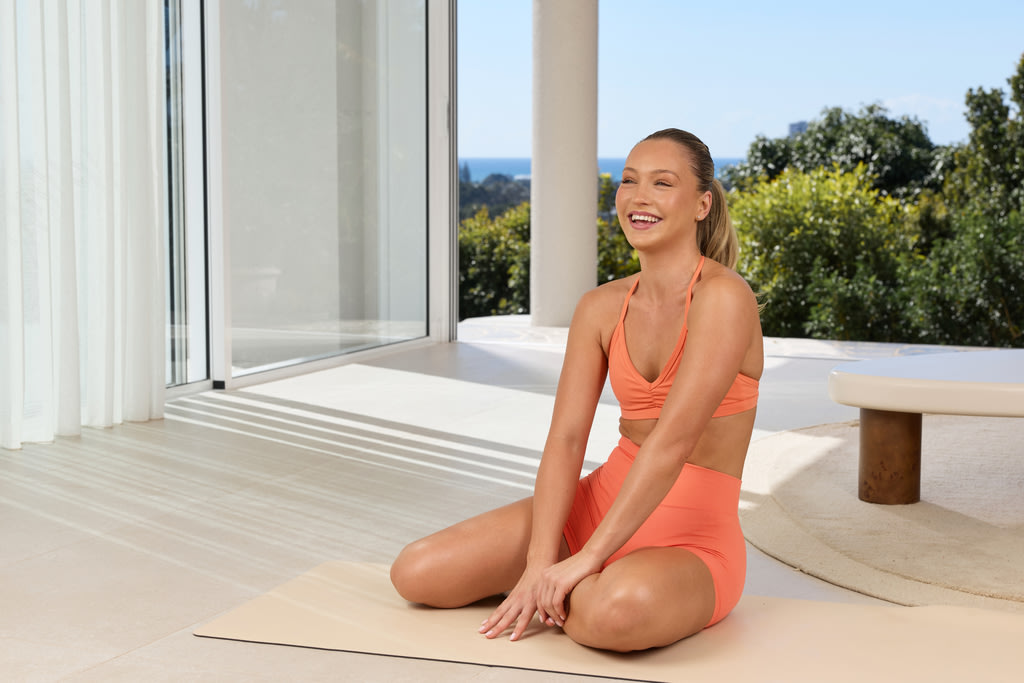
Starting Pilates for the first time can feel intimidating when everyone around you already seems to know what a neutral spine is. But don't stress. Everyone was a beginner once, and you don't need equipment, experience or flexibility to begin.
Pilates is a low-impact training style that builds core strength, stability and control through slow, precise movement. It's one of the most beginner-friendly ways to start training at home, and one of the few you can do in a small space with nothing but a mat.
Here's what you need to know before your first session: what Pilates actually is, good equipment to start with, how often to do it, how it compares to yoga and barre, and some key exercises. You can also start with this free 30-minute workout from Precision Pilates with Jetaya.
"For those who are new to Pilates, it's not about rushing or trying to smash through the workout as fast as you can," says Jetaya. "You want to really feel each rep, embrace the burn, get your alignment right and continue building that beautiful mind-body connection."
What is Pilates?
Pilates is a low-impact training method built around controlled, precise movement rather than heavy loads or high reps. In a session, you'll focus on your breath and your form, building strength primarily through your core while improving flexibility, posture and body awareness.
Joseph Pilates developed the method in the early 20th century as a form of rehabilitation, calling it Contrology, and opened his first New York studio in 1926. The six principles most instructors still teach today were drawn from his work by later teachers:
Concentration: paying attention to what your body is doing rather than moving on autopilot
Control: every movement is deliberate, never rushed or thrown
Centering: initiating movement from your core
Breath: coordinating your breathing with each movement
Precision: quality of movement over quantity of reps
Flow: moving smoothly from one exercise into the next
That focus on form is what makes Pilates a good entry point if you're new to structured training, coming back after time off, or working around an injury. If you're managing a specific injury or condition, check with your doctor or physio first.
While there are equipment-based styles such as reformer Pilates, which uses a spring-loaded carriage, Sweat's Pilates programs are designed for at-home training using a mat and minimal equipment.
How to get started with Pilates
Before you roll out your mat for the first time, it's worth getting familiar with the fundamentals of this training style. Precision Pilates with Jetaya is a great program to try if you're new to the practice, as Jetaya's intentional, low-impact classes are grounded in technique with real-time coaching and helpful cues to help you get the most out of each session as you move with control. The Sweat app also offers over 80 On Demand Pilates workouts to try.
Before your first session, a few things will make life easier:
Set up your space
You won't need much room for your at-home Pilates practice, just enough floor space for your mat. Your bedroom, living room, garage, backyard or balcony will do, so long as the surface is flat and even.
Invest in some basic equipment
You can easily get started with just your mat, but a few inexpensive extras can help you level up your sessions. Consider investing in light dumbbells, hand and ankle weights, and a short resistance band if you want a bit more of a challenge. If you decide to invest in even more pieces down the track, you can also add a block, Pilates ball or Pilates ring to your set-up.
Focus on form and control
It's normal to feel humbled in your first Pilates workout. Be proud that you're starting something new, and don't assume you're bad at this because it's hard. Slow down, move with control, let yourself be a beginner and take modifications if you need them.

How often should you do Pilates?
For most beginners, two to three Pilates sessions a week is enough to build strength and start seeing progress, with rest or other movement (like walks or traditional strength training) in between. Sessions of 20 to 30 minutes are plenty when you're starting out.
More isn't automatically better here. Because Pilates is low-impact, it's tempting to do it every day, and you can once your body is used to it. But in your first few weeks you're learning new movement patterns and challenging your muscles in new ways, and that takes recovery. Three sessions where you actually feel your core working will do more for you than six rushed ones.
A simple place to begin if you're starting from scratch:
Weeks 1 to 2: two sessions a week, 20 to 30 minutes each
Weeks 3 to 4: three sessions a week
From there: add a fourth session or longer workouts, if you're recovering well between them
Pilates also pairs well with other training. If you're already strength training or running, two Pilates sessions a week alongside your usual routine is a realistic starting point. Our Strength & Pilates program is perfect if you're looking for a routine that balances both.
How do Pilates, yoga and barre differ?
Confused about the key differences between Pilates, yoga and barre? All three are low-impact disciplines and a great way to move your body at home with minimal space and equipment, but each has unique qualities.
Pilates has its origins in rehabilitation and has a greater focus on building core strength through considered movement that prioritises form over reps.
Barre is rooted in ballet, and this training style combines ballet-inspired movements with functional strength training. Like Pilates, you can expect lots of burning, shaking pulses in barre.
Yoga is traditionally a meditative and spiritual practice, with a strong focus on flexibility, breathwork, relaxation and strengthening your mind-body connection. In terms of the physical practice, there are also different styles such as yin, vinyasa and hatha.
No matter which practice you prefer, as a beginner, it's best to start with slow, focused movements as you master your form and build confidence.

Pilates exercises for beginners
Before you press play on your first full session, try these five exercises. Focus on moving slowly and feeling the right muscles work rather than getting through the reps quickly.
The hundred
One of the most commonly taught Pilates movements, designed to build core stability and strength. It won't take long to feel this one burning.
Lie flat on your back and bring your legs into tabletop, knees stacked over your hips and shins parallel to the floor. Rest your arms long by your sides, palms down. Inhale, then exhale as you lift your head and shoulders off the mat and hover your arms just above the floor. Pulse your arms up and down, breathing in for five pulses and out for five, until you reach one hundred.
Beginner tip: keep your knees bent. Extending your legs long is a progression to work towards, not a starting point. If your neck feels strained, rest your head on the mat and pulse only your arms.
Glute bridge
This one strengthens your glutes and hamstrings, and many people find it helps ease general lower back tension.
Lie flat on your back with your knees bent and feet flat on the floor, hip-width apart. Inhale, then exhale as you press your heels into the mat, squeezing your glutes and lifting your hips until your body forms one straight line from your chin to your knees. Inhale to lower back down with control.
Beginner tip: if you feel this mostly in your lower back, walk your feet a little further from your body and squeeze your glutes before you lift.
Rolling like a ball
A great one for mobilising your spine and giving your back a stretch.
Sit on your mat and draw your knees into your chest. Hold onto your shins, tuck your chin towards your knees, and lift your feet so they hover just above the floor. Inhale, then exhale as you roll back onto your shoulder blades. Roll back up to sitting using control rather than swinging your legs for momentum.
Beginner tip: stop at your shoulder blades. Never roll onto your neck or head.
Chest lift
Sometimes called an abdominal curl, this works your upper abdominal muscles.
Lie flat on your back with your knees bent and feet flat on the floor. Rest your hands lightly behind your head, fingers interlaced and elbows wide. Inhale, then exhale as you draw your ribs towards your hips and lift your head, shoulder blades and upper back off the floor. Inhale as you lower back down.
Beginner tip: your hands support the weight of your head, they don't pull it. If your chin is jamming into your chest and your arms are feeling like they're doing a lot, you're pulling.
High plank
A Pilates plank works your shoulders and core at the same time.
Start on all fours with your shoulders stacked over your wrists and hips over your knees. Step your feet to the back of the mat and lift your hips so your body forms a straight line from your head to your heels. Keep your core engaged and press firmly away from the floor to support your upper body.
Beginner tip: start with 20 to 30 seconds and build from there. Dropping to your knees, keeping that same straight line from head to knees, is a solid option rather than a lesser one.
Choosing your Pilates program in the Sweat app
Ready to pick your Pilates program? Sweat has a number of different programs to choose from depending on your training goals.
Precision Pilates with Jetaya
This 6-week program is all about mastering your Pilates technique with a focus on control, alignment and your mind-body connection. This is a great starting point if you're new to the practice and want to master the fundamentals, as Jetaya will strengthen, sculpt and challenge you as you build your confidence.
Pilates with Sara
This 16-week program combines traditional and contemporary Pilates with functional movement to help you feel strong, athletic and powerful. There are four foundation weeks designed to help beginners get comfortable and confident with the training style before progressing through the program.
While Pilates is fantastic on its own, so many women in the Sweat Community love pairing it with traditional strength training so they can experience the benefits of lifting alongside the control and stability of Pilates. If you want to combine Pilates sessions with strength workouts, why not try:
Strength & Pilates with Kayla & Jetaya
This multi-trainer program is built around two strength workouts and two Pilates sessions each week, all designed to be completed at home. With your weekly schedule planned for you, this program allows you to combine both training styles without needing to switch between programs or add On Demand workouts to your routine.
The 3-2-1 Method with Katie
This is consistently a community favourite, with three strength workouts, two Pilates sessions and one run (or cardio of your choice) every week. If you're after workouts that blend Pilates and strength training together, Katie's Strength & Pilates Fusion program is exactly what you're after.
Just start
Starting something new is always the hardest part, and you've already done the reading. Keep it simple from here: two or three sessions a week, form over reps, and modifications whenever you need them. Nobody feels like a pro in their first Pilates session, but you'll soon realise why this training style is so addictive.
A more empowered you starts with Sweat, and our editorial team is here to bring you the latest fitness tips, trainer recommendations, wellbeing news, nutritional advice, nourishing recipes and free workouts.
* Disclaimer: This blog post is not intended to replace the advice of a medical professional. The above information should not be used to diagnose, treat, or prevent any disease or medical condition. Please consult your doctor before making any changes to your diet, sleep methods, daily activity, or fitness routine. Sweat assumes no responsibility for any personal injury or damage sustained by any recommendations, opinions, or advice given in this article.
Fitness