How To Do A Squat Properly: And Yes, Your Knees Can Go Past Your Toes
A step-by-step guide to squatting with good form, plus the muscles it works, how low to go and what to try next.

April 21, 2020 - Updated November 17, 2026
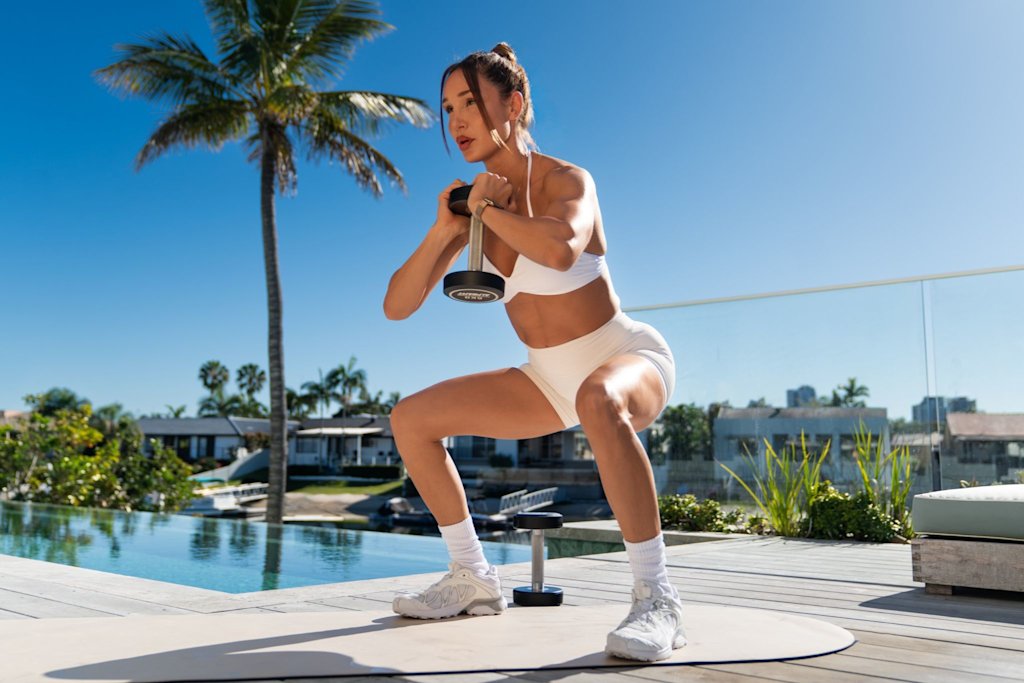
You squat dozens of times a day without thinking about it, every time you sit on the couch or pick something up off the floor. A squat in a workout is the same movement (just probably a bit more precise): stand with your feet about shoulder-width apart, push your hips back, and bend your knees until your thighs are close to parallel with the floor, keeping your chest up and your heels down. Then press your whole foot into the floor to stand back up.
That's the move. The rest of this guide breaks down the smaller steps that get all the right muscles working and make it feel strong instead of wobbly, plus one rule you've probably heard that we'd like you to forget: your knees are allowed to go past your toes.
This is one of the most fundamental exercises to learn and offers so much room for progression. Squats work your glutes, quads and core in a single compound movement, you can do them in a hotel room or a fully equipped gym, and there's a version for every level, from sitting down onto a chair to a heavy barbell back squat.
How to do a squat, step by step
A good bodyweight squat comes down to six steps. Go slowly the first few times and really build that mind-muscle connection. The movement will feel like second nature in no time.
Set your feet. Stand with your feet about shoulder-width apart (a little wider is fine), and your toes turned out slightly. Everyone's hips are shaped a bit differently, so try a few reps at slightly different widths and keep the one where you can sit lowest with your heels still on the floor.
Brace your core. Breathe in and tighten your abs as if you're about to be poked in the stomach. Lift your chest (that 'proud chest' feeling), pull your shoulders gently back, and look straight ahead or at a spot on the floor in front of you, whichever keeps your neck comfortable.
Sit back and down. Push your hips back and bend your knees at the same time, as if you're sitting onto a low chair that's slightly too far behind you. Let your knees travel forward and out so they stay in line with your toes, rather than caving in towards each other. Bring your hands together in front of your chest, or reach your arms straight out in front of you if you need help balancing.
Find your depth. Lower until your thighs are about parallel with the floor, or as low as you can go while your heels stay down and your lower back stays neutral (not tucking under). If you can only get halfway down today, that's your starting point! Depth comes with practice.
Stand back up. Press your whole foot into the floor (big toe, little toe and heel all staying down) and stand up, breathing out as you rise. Squeeze your glutes at the top without pushing your hips forward past your feet.
Reset and repeat. Take another breath and brace again before the next rep.
Form tip: Watch yourself side-on in a mirror or prop your phone up and film one set from the side. It's the quickest way to see whether your heels are lifting or your chest is dropping.
What muscles do squats work?
Squats mainly work your quads (the front of your thighs) and your glutes (your butt). Your adductors (inner thighs) work hard too, while your hamstrings, calves and core help keep you stable.
You should feel them mostly through your thighs and glutes, with your abs working to hold you upright. You shouldn't feel sharp pain in your knees or strain in your lower back. If you do, check the mistakes below, and if it still doesn't settle, see a physio or read our guides to knee pain when squatting and lower back pain after squats.
Squats aren't much of a hamstring exercise (the backs of your thighs). In a 10-week training study, hamstring size didn't change with squats at all, even at full depth (Kubo et al., 2019). If stronger hamstrings are your goal, make sure you've also got hinge movements like deadlifts in your workout routine.
The benefits go beyond your legs, too. Squatting is the same pattern you use to get out of a car, lift anything off the ground, or carry the groceries up the stairs, so building squat strength in your workouts makes everyday life easier.
How low should you squat?
Aim for your thighs to reach at least parallel with the floor, and go deeper if you can keep your heels down and your back neutral. Deeper squats tend to build more glute muscle: in that same study, people who trained with full-depth squats grew their glutes about three times as much as those who did half squats (Kubo et al., 2019).
If you can't get that low yet, the culprit is usually ankle mobility, hip mobility or simply unfamiliarity with the position. Here's what we recommend:
Raise your heels. Stand with your heels on a pair of small weight plates or a folded yoga mat. This gives your ankles more room and often adds instant depth.
Squat to a box. Sit down onto a chair, bench or the edge of your couch, then lower the target over time.
Spend time at the bottom. Hold onto a door frame or kitchen bench and sit in a deep squat for 30 seconds a few times a day. Our mobility exercises can help too.
If your lower back rounds and your pelvis tucks under at the very bottom (known as butt wink), always stop just above the point where that happens to protect your back, especially once you're training with weights.
Can your knees go past your toes when you squat?
Yes! For most people, letting your knees travel forward past your toes is a normal part of squatting deeply, and you don't need to fight it. When you're doing any squat movement in everyday life, it's also very natural for your knees to travel past your toes, so it's great to be comfortable with that range of movement.
The "knees behind toes" rule has been around for decades, and we've repeated it ourselves. But when researchers stopped people's knees moving forward during a squat, the load on their knees dropped by about 22%, while the load on their hips rose almost tenfold (Fry et al., 2003). Blocking your knees mostly forces you to lean further forward, which shifts the stress to your hips and lower back instead.
What is definitely worth watching out for and avoiding is your knees caving inward. Keeping them in line with your toes matters far more than how far forward they go. If you have a current knee injury or your knees hurt when you squat, a physio can help you find a range (or exercise alternatives) that are best for you.

5 squat mistakes beginners make (and how to fix them)
Most squat problems come down to the same five mistakes, and each has a simple fix.
Knees caving in. This often happens on the way up, especially as you get tired. You push out of the base of your squat and your knees cave in slightly. Training in front of a mirror can help you see if this is happening. Think about gently pushing your knees out over your little toes. A mini band just above your knees gives you something to push against and makes the cue easier to feel.
Heels lifting. If your weight shifts into your toes and your heels lift, your knees take more load and you lose power. Keep your whole foot planted the entire time, and try raising your heels on small plates if your ankles are stiff.
Chest dropping forward. Folding over turns your squat into something closer to a hinge and loads your lower back. Holding a weight at your chest in a goblet squat (below) is the easiest way to learn to stay upright.
Rushing. Dropping down fast and bouncing out of the bottom takes the work away from your muscles. Effective strength training isn't about speed. Try taking three seconds to lower, pausing for a second at the bottom, then standing up with control.
Squatting in cushioned running shoes. Thick, soft soles make your feet less stable. Flat-soled sneakers, lifting shoes, socks or bare feet all work better for squats.
For an even deeper look at form problems, including what to do if your hips shift to one side, read our guide to squat mistakes to avoid.
How many squats should you do as a beginner?
Three sets of 8 to 12 bodyweight squats, two or three times a week, is a great place to start. Rest for about a minute between sets and leave a day between squat sessions.
When you can do three sets of 15 with good form and it feels easy, it's time to level up, and the most effective way to do that is to add weight (rather than doing some '100 squats a day' challenge). High-rep bodyweight squats will get you tired, but they stop building much strength fairly quickly. Holding a dumbbell or loading up a barbell for 10 good reps will usually do more for your legs than 100 rushed ones. This is progressive overload, and it's how you keep getting stronger.
No dumbbells? Try using milk bottles filled with sand or throw a bunch of heavy books into a backpack (you can wear it on your front or your back, whatever feels most comfortable).
Squat variations to try next
Once your bodyweight squat feels solid, these variations give you plenty of room to progress and change up your training.
Goblet squat
Hold one dumbbell vertically at your chest with both hands cupped under the top end (or hold a kettlebell by the sides of its handle, or flip it and grip the round bell, whichever feels more natural). Keep your elbows tucked in and squat as normal. The weight in front acts as a counterbalance, which makes it easier to keep your chest up and sit deeper, so this is often the first weighted squat we'd teach a beginner.
When you're ready for more: Go heavier, or add a two-second pause at the bottom.
Sumo squat
Take a wider stance, about one and a half times shoulder-width, with your toes turned out more than usual. Hold a dumbbell or kettlebell between your legs with straight arms and squat down, pushing your knees out in line with your toes. The wider stance puts more emphasis on your inner thighs and glutes.
When you're ready for more: Go heavier, use a barbell, or stand with each foot on a low step so the weight can travel even lower.
Bulgarian split squat
Stand a big stride in front of a bench with the top of your back foot resting on it. Lower your back knee towards the floor, keeping most of your weight in your front foot, then press up through that front foot. Working one leg at a time helps even out any strength differences between sides. Our Bulgarian split squat guide walks through it in detail.
When you're ready for more: Hold a dumbbell in each hand and go heavier over time.
Barbell back squat
Rest a barbell across the meaty part of your upper back (your upper traps, not the bony part of your neck), grip the bar a little wider than your shoulders and squat as normal. If it's your first time in a squat rack, use a bar without any additional weight, or set the safety bars just below the lowest point of your squat, so you can set the bar down safely if a rep doesn't go up.
Before you try it: Make sure you can do 3 sets of 10 goblet squats with good form. Then start with an empty bar (usually 20 kg / 45 lb, though many gyms also have a lighter 15 kg / 35 lb bar) and add weight gradually once your form feels consistent.
Feeling strong? Single-leg pistol squats are the ultimate squat challenge to work towards.
Where to start if you only remember one thing
Feet shoulder-width apart, hips back, knees out, chest up and your whole foot on the floor. Get those right and your knees can travel wherever they need to go.
This week, try three sets of 10 box squats to a chair, two or three times. Once those feel easy, pick up a dumbbell and move on to goblet squats. Squats show up in almost every Sweat program, so if you'd like a trainer to tell you exactly what to do next, Strength in 30 is a great place to start.
A more empowered you starts with Sweat, and our editorial team is here to bring you the latest fitness tips, trainer recommendations, wellbeing news, nutritional advice, nourishing recipes and free workouts.
* Disclaimer: This blog post is not intended to replace the advice of a medical professional. The above information should not be used to diagnose, treat, or prevent any disease or medical condition. Please consult your doctor before making any changes to your diet, sleep methods, daily activity, or fitness routine. Sweat assumes no responsibility for any personal injury or damage sustained by any recommendations, opinions, or advice given in this article.
Fitness