What Is a Superset? The Strength Training Method Explained
There’s a reason supersets feature in so many strength training programs!

September 2, 2025 - Updated June 9, 2026
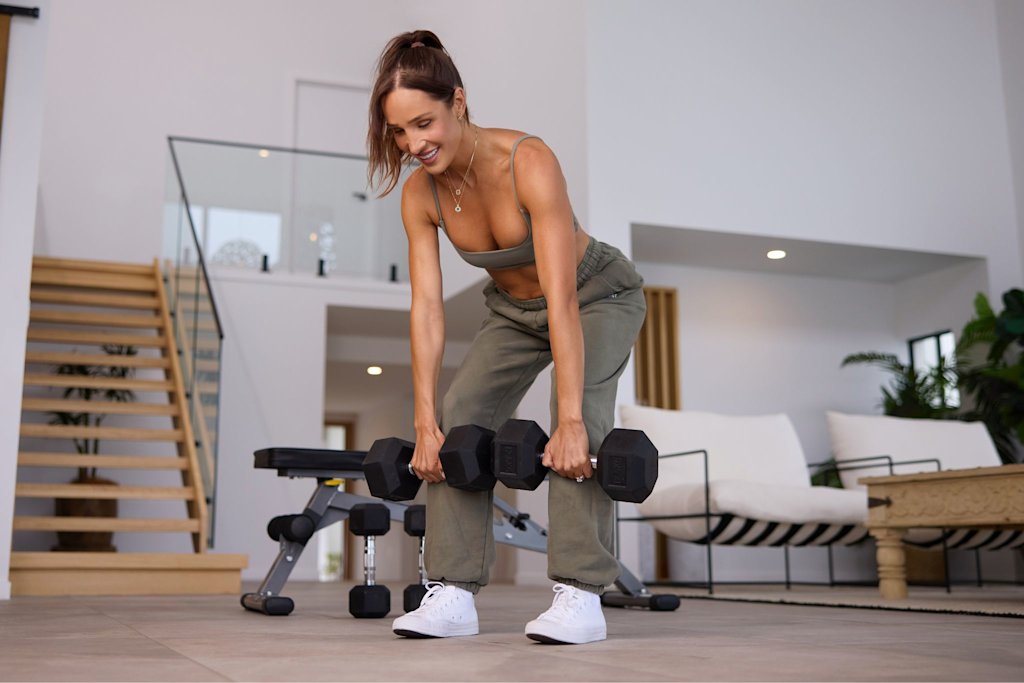
If you're looking at your workout and wondering what "superset" means (or just hitting start and pretending you do) - no judgement. It's one of those fitness terms that gets thrown around a lot, and it's actually super simple once someone explains it properly. Here's everything you need to know.
What is a superset?
A superset is two exercises performed back-to-back with little to no rest between them. For example, 12 squats followed immediately by 12 lunges, or 10 bicep curls straight into 10 tricep dips. You'd then rest and repeat the pairing for as many rounds as your workout calls for.
Sometimes a superset pairs exercises from opposing muscle groups (like legs then arms) so one area can recover while the other works. Other times, it pairs neighbouring muscles, like biceps and triceps, to really fatigue an area and increase time under tension.
What are the benefits of supersets?
Efficiency: You're cutting down rest time, so your workouts are quicker but still effective. Perfect when you've got a busy schedule or only have a limited window to squeeze in a session. Research has shown that, compared with traditional sets, supersets can produce greater training volume and muscle fatigue in less time.
Elevated intensity: Moving from one exercise to the next without a break keeps your heart rate up, which means you're working harder and challenging your cardiovascular system as well as your muscles.
More burn in less time: The calorie burn is never on our list of motivating reasons to work out, but from a scientific perspective, superset workouts can lead to a higher calorie burn in a shorter workout because your heart rate stays elevated throughout.
Increased muscle power: All that extra time under tension is fantastic for building muscular strength and endurance.
Balanced training: Because supersets always include different muscles, you can hit several muscle groups (or your entire body) in one workout without it taking up half your day. If you're doing supersets that target your upper body, make sure your next workout targets your lower body for a well-rounded routine.
How to structure a superset workout
Pick two exercises and decide whether you want to target opposing muscle groups (for a more balanced session) or the same muscle group (for extra fatigue). Aim for 8-15 reps of each exercise, rest for 30-90 seconds after completing both, then repeat for 3-4 rounds before moving on to your next superset pairing.
If you're new to supersets, start with a weight that feels challenging by the last few reps but doesn't compromise your form. You can always go heavier once you're used to the format.
Sweat programs like Grow with Mariah and Sculpt at Home by Mariah Morse do all the programming for you. Mariah's training style leans heavily on supersets to maximise muscle fatigue and keep sessions efficient, whether you're at the gym or working out from your living room.
How do supersets compare to traditional sets?
The two main differences between supersets and traditional sets are the number of exercises and the amount of rest. Supersets include two exercises compared to traditional sets, which include one, and traditional sets involve rest between each set of reps, whereas supersets keep you moving without the rest breaks.
Both allow you to lift heavy, fatigue your muscles, build strength and have a great workout, so it just depends on what kind of experience you want and can fit into your schedule.
If you have more time available and like to take more rest breaks (or are really working on lifting heavy and increasing weight), a program with traditional strength sets could be perfect for you to give your muscles that extra recovery time. Strength with Kayla and Strength at Home both follow this structure.
If you like your workout to feel dynamic, want your muscles to burn the whole time, and want to save time, supersets are a great structure for you. Strength & Sculpt with Katie Martin, Grow with Mariah, and Sculpt at Home by Mariah Morse are all built around supersets, making them great options if you want to hit more muscle groups in a shorter session.
Other methods, like circuits (a series of several exercises one after the other), ladders (reps increasing or decreasing across sets), or drop sets (perform reps to failure, then lower the weight and repeat), have their perks too. But supersets are one of the simplest ways to level up without overcomplicating things. We love that they're efficient and effective no matter what fitness level you're at.
Erin is a writer and editor at Sweat with years of experience in women's publishing, the fitness industry, media and tech. She's passionate about the power of movement, and you can often find her on a yoga mat, a hike, a dance floor, in the ocean or the gym.
* Disclaimer: This blog post is not intended to replace the advice of a medical professional. The above information should not be used to diagnose, treat, or prevent any disease or medical condition. Please consult your doctor before making any changes to your diet, sleep methods, daily activity, or fitness routine. Sweat assumes no responsibility for any personal injury or damage sustained by any recommendations, opinions, or advice given in this article.
Fitness