How To Master The Turkish Get-Up
Strength, stability, mobility and coordination — all in one movement. Here's how to nail the Turkish get-up.

May 27, 2026 - Updated May 27, 2026
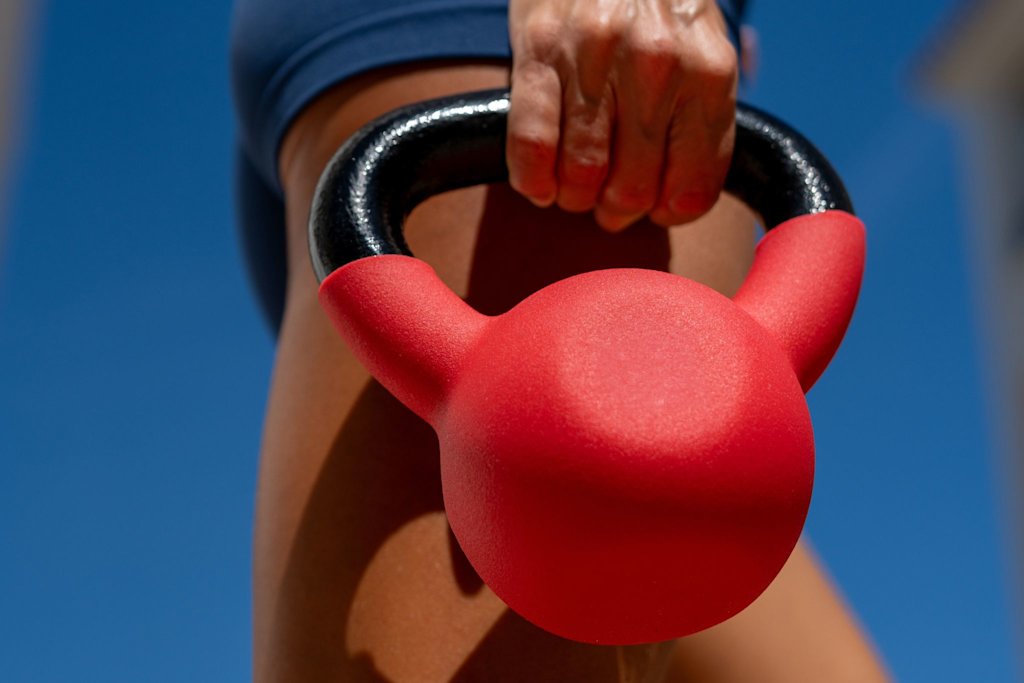
There are exercises that look impressive and do very little for you. Then there are moves like the Turkish get-up, which looks a bit chaotic and complex the first time you see it, but it's also one of the most functional exercises you can add to your routine. Functional strength, stability, mobility, coordination — all in one movement.
What is a Turkish get-up?
The Turkish get-up is a full-body movement that takes you from lying flat on your back to standing upright, then back down again, all while holding a weight (usually a kettlebell) overhead. It's really simple in theory, but the execution is another story.
Unlike exercises that target a single muscle group and work in one plane of movement, the Turkish get-up requires multiple parts of your body to work together. Your shoulder stabilises the weight overhead, your core keeps you balanced, your hips generate power, and your entire body coordinates each transition. It's an amazing strength-training exercise to help build stability, control, and functional movement patterns.
What muscles does a Turkish get-up work?
The Turkish get-up is truly a full-body exercise, but some of the main muscles involved include:
Shoulders and rotator cuff: Help stabilise the weight overhead throughout the movement.
Core muscles: Your abdominals and deep core muscles work continuously to resist rotation and maintain control.
Glutes and hips: Drive the bridge position and help power the transition to kneeling and standing.
Lats and upper back: Support shoulder stability and maintain good posture.
Quadriceps and hamstrings: Assist during the lunge and standing portions of the exercise.
One of the biggest Turkish get-up benefits is that it trains both strength and stability simultaneously, rather than focusing on just one or the other.
How to do a Turkish get-up correctly
If you're learning how to do a Turkish get-up for the first time, start with bodyweight or a very light kettlebell to master the movement pattern before increasing the load.
Step 1: Start position
Lie on your back with your right leg bent and your right foot flat on the floor. Extend your left leg out at roughly a 45-degree angle and hold the weight in your right hand with your arm extended straight above your shoulder.
Position your left arm out to the side at about 45 degrees, palm facing down.
Step 2: Roll to your elbow
Keep your eyes on the weight throughout the movement, press through your right foot and engage your core to roll onto your left elbow, lifting your upper body from the floor. Keep your right arm vertical and your shoulder drawn down away from your ear.
Step 3: Press to your hand
Straighten your left arm and press up onto your left hand. Your chest should stay open and your eyes remain fixed on the weight overhead.
Step 4: Lift into a bridge
Drive through your right foot and left hand to lift your hips off the floor into a bridge position. Aim to create enough space underneath your body to move your left leg through comfortably.
Step 5: Sweep the leg through
Bring your left leg underneath your body and place your left knee on the floor beneath your hip. You should now be in a half-kneeling position, supported by your left hand.
Step 6: Move to tall kneeling
Take your left hand off the floor and bring your torso upright so you're in a stable half-kneeling position. Check that the weight is still stacked directly above your shoulder.
Step 7: Stand up
Press through both feet to stand up completely, keeping the weight overhead. You've completed half of the Turkish get-up.
Now, reverse each step carefully to return to the starting position. The descent is just as important as the ascent, so stay controlled throughout. That's one rep.
Kettlebell Turkish get-up vs bodyweight Turkish get-up
The kettlebell Turkish get-up is the most common weighted version you'll see, but starting with just your fist raised overhead (no weight at all) can be super helpful. Practising with a closed fist can help you develop body awareness and control before introducing weight.
Once you're comfortable with the steps, add a light kettlebell or dumbbell. Even well-trained people are often surprised by how challenging the Turkish get-up feels with relatively light loads. That's because the exercise demands stability and coordination, not just strength.
No kettlebell? A dumbbell works just as well. The mechanics remain the same, although the grip and weight distribution will feel slightly different.
Turkish get-up benefits
Why bother even learning an exercise with this many steps? Aside from being genuinely fun for your body and mind, the physical payoff is worth it too for several reasons:
Builds shoulder stability
The Turkish get-up challenges your shoulder to maintain stability through multiple positions and ranges of motion.
Because the load stays overhead throughout the exercise, it helps develop strength and control in the muscles that support the shoulder joint.
Strengthens your core
Unlike exercises such as crunches or sit-ups, the Turkish get-up trains your core to resist movement rather than create it. Your abdominals, obliques and deeper stabilising muscles work throughout the entire exercise to keep you balanced and aligned.
Improves coordination and body awareness
The Turkish get-up requires you to move with intention rather than speed or power. Learning the sequence can improve your mind-body connection, coordination and overall movement quality.
Develops functional strength
Many everyday activities require you to move between the floor and standing while maintaining balance and control. The Turkish get-up trains these real-world movement patterns while building total-body strength.
Challenges mobility and stability together
Few exercises demand both mobility and stability at the same time. The Turkish get-up encourages mobility through the hips and thoracic spine while reinforcing stability through the shoulders and core.
Common mistakes to avoid
Rushing through the movement. This is not an exercise to speed through. Each transition should be deliberate and controlled.
Letting the weight drift forward. The weight should stay stacked directly overhead. If it starts tilting or your elbow bends, the load is probably too heavy. Don't hesitate to pick a lighter weight if it's messing with your form.
Neglecting the second half. The lowering phase is just as important as standing up. Resist the urge to collapse back to the floor and try to reverse each step with the same attention and control.
Going too heavy too soon. Like any technical exercise, it's always best to master the movement pattern with bodyweight or a light load before progressing to heavier weights.
Who should try Turkish get-ups?
Turkish get-ups can be a great addition to many training styles and workout routines, including:
Strength training programs
Functional fitness routines
Kettlebell workouts
Athletic performance training
General fitness programs focused on balance and coordination
However, if you have an existing shoulder injury or pain that worsens with overhead movements, it may be worth checking in with a healthcare professional before adding Turkish get-ups to your routine.
How to add Turkish get-ups to your workouts
Because Turkish get-ups require concentration and coordination, they're often best performed near the start of your workout when you're feeling fresh. Try 2-3 sets of 2-5 reps per side, focusing on quality over quantity.
You can use them as:
A movement preparation exercise during your warm-up
A standalone strength exercise
Part of a kettlebell conditioning workout
An accessory exercise to complement your regular strength training
The Turkish get-up might feel a bit awkward at first, and it might take you a few goes to get it right, but don't let that put you off. Like any skill, it gets easier with practice.
Erin is a writer and editor at Sweat with years of experience in women's publishing, the fitness industry, media and tech. She's passionate about the power of movement, and you can often find her on a yoga mat, a hike, a dance floor, in the ocean or the gym.
* Disclaimer: This blog post is not intended to replace the advice of a medical professional. The above information should not be used to diagnose, treat, or prevent any disease or medical condition. Please consult your doctor before making any changes to your diet, sleep methods, daily activity, or fitness routine. Sweat assumes no responsibility for any personal injury or damage sustained by any recommendations, opinions, or advice given in this article.
Fitness